


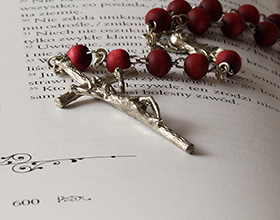
For some, the one quality most important for those pursuing a religious vocation is awesomeness. It matters not whether clergy, nuns and other religious adhere to the actual doctrines of their faith, whether they advocate for the poor and powerless and spread the Word of God. Specifically, Jo Piazza, author of the absurdly titled If Nuns Ruled the World, authored an advertisement disguised as a Time opinion piece for her recently released book. The Vatican, according to Piazza, doesn’t fairly recognize the awesomeness of nuns who stray from Roman Catholic doctrine in pursuit of progressive policy goals. And, according to Piazza, that’s bad. Very, very bad indeed. Because, you know, the activist sisters are really pretty darn awesome.
Rather, it’s far better to chase celebrity while sprinkled with the progressive fairy dust of awesome as are so many of the shareholder activist nuns who, in Piazza’s words, “make corporations responsible to the human race.” These selfless and progressive nuns, Piazza gushes, “don’t brag about all of the good that they do or hashtag how awesome they are on Facebook, many people have no idea about the things they plish on a daily basis.”
Here you go, Jo: #awesomeprogressivenun.
Make no mistake, there are many nuns doing the Lord’s work – and recognize it’s the Lord and not themselves and their works that are awesome. As a matter of fact, Piazza lists several of them in her Time article and in her book. This before she jumps the shark by asserting:
Most people don’t know about Sister Nora Nash, a Franciscan Sister who lives just outside of Philadelphia. As her order’s Director of Corporate Social Responsibility, Sister Nora wakes up every single morning determined to make corporations more responsible to the human race. Sister Nora and her assistant director, Tom McCaney have taken to task the grocery store chain Kroger over the rights of farm workers, Hershey’s pany over child labor, McDonald’s over childhood obesity, Walmart on raising their minimum wage and Wells Fargo over predatory lending practices. Nash wakes up every single morning determined to make corporations more responsible to the human race. Then she follows through on it.
For more than four decades Sister Jeannine Gramick has been tireless in her fight for gay rights through her organization New Ways, ing under intense scrutiny from the Vatican.
Get it now? Thwarting Vatican doctrine is awesome! Challenging mission drift of the Leadership Council of Women Religious has even earned a cute descriptor: “The Nunquisition,” e to think of it, also is a clever marketing slogan when one has a new book to sell.
It’s a problem that you haven’t heard about these women. You would think that, during a time when the Church has suffered from great criticism and weathered very public scandals, it would be celebrating these incredible achievements. Think again.
The Vatican doesn’t celebrate these women. In fact, it has done the very opposite. Attacks on American nuns have been happening since 2008, when the Vatican’s Congregation for Institutes of Consecrated Life and Societies of Apostolic Life initiated an “Apostolic Visitation,” a euphemism for investigation, of the nuns.
To put it in perspective, previous “visitations” conducted by the Church were designed to investigate things like the priest sex abuse scandal.
The nuns nicknamed it the Great Nunquisition and in the past eight years e under scrutiny from the church patriarchy.
Everyone knows that the patriarchy is holding nuns back, right? Unless of course your patriarch and sugar daddy is the octogenarian progressive billionaire George Soros (see: Surprise! “Nuns on the Bus” was a Soros-funded publicity stunt). More Piazza:
A 2012 Vatican document highlighted the Church’s problem with the Leadership Council of Women Religious, the largest group of nuns in the United States. The document claimed that the LCWR was “silent on the right to life from conception to natural death” and that Roman Catholic views on the family and human sexuality “are not part of the LCWR agenda in a way that promotes church teachings.”
Today’s nuns are simply too progressive for the Vatican. The Vatican chooses not to celebrate nuns and it chooses not to empower them
So the Vatican “attacks” nuns? That’s a loaded phrase, as is the forced equivalency of Church scandals with nuns working at cross purposes with core doctrine. Piazza continues:
Speaking at the annual LCWR assembly earlier this month, Franciscan Sister Ilia Delio described exactly what it means to be a nun today: “We are about drawing in the poor, the lonely, the marginalized, all those seeking to be part of a whole,” she said. “This is nothing more and nothing less than the most awesome vocation.”
It is awesome. The nuns are awesome. But if the Vatican doesn’t start treating them as such, there is no incentive for more young women to aspire to join their ranks.
And those nuns who perform myriad good deeds every minute of every day are certainly fulfilling the calling of an awesome vocation in the service of an awesome God. But es Piazza who lumps those nuns truly assisting the neediest with those such as Nora Nash who simply advocate for progressive political causes masked as religious in nature.
One more for you, Jo: #progressivefairydust.







 zpostcode
 Recruit
 weather
 mreligion
 Yellowpages
 sport
sport constellation
 shopping
 name
name game
game directory
 literature
 Word
Word tour
tour furnish
 Lottery
 tftnews
 lyrics
 News
News digital
 car
car dir
dir Edu
Edu Finance


