Home
/
RELIGION & LIBERTY ONLINE
/
The Transfiguration of Our Lord
Dec 19, 2025 10:28 AM

Mt. Tabor

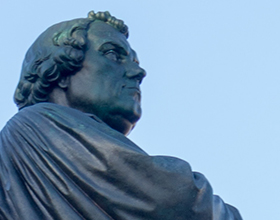
In much of the Christian world today, the great feast of the Transfiguration of Our Lord memorated (Matt. 17:1-9). In the Eastern Church, as Fr. Seraphim Rose observed, it is customary to “offer fruits to be blessed at this feast; and this offering of thanksgiving to God contains a spiritual sign, too. Just as fruits ripen and are transformed under the action of the summer sun, so is man called to a spiritual transfiguration through the light of God’s word by means of the Sacraments. Some saints, (for example – Saint Seraphim of Sarov), under the action of this life-giving grace, have shone bodily before men even in life with this same uncreated Light of God’s glory; and that is another sign to us of the heights to which we, as Christians, are called and the state that awaits us – to be transformed in the image of Him Who was transfigured on Mount Tabor.”

Fr. Lev Gillet saw a three-fold meaning in the Transfiguration:

The Jesus that the disciples knew well and whose looks, in ordinary life, did not differ radically from those of other people, suddenly appears to them in a new and glorious form. In our inner life, a similar experience can happen in three ways.

Sometimes our inward image of Jesus es (to the eyes of the soul) so luminous, so resplendent, that we seem truly to see the glory of God in this face: somehow the divine beauty of Christ es for us an object of our experience.

Or, sometimes, we feel with great intensity that the inner light, that light which is given to all men born into the world as a guide to their thought and action, is identified with the person of Jesus Christ: the power of the moral law es fused with the person of the Son, and the attraction of sacrifice makes us glimpse the sacrificed Saviour, and hear his call.

Sometimes, too, we e aware of Jesus’s presence in some man or woman whom God has set in our path, especially when it is given to us to passion to their sufferings: then, in the eyes of faith, the man or woman is transfigured into Jesus Christ. From this last example, one could evolve a precise spiritual method, a method of transfiguration which could apply to everyone, everywhere and always.


Comments
Welcome to mreligion comments! Please keep conversations courteous and on-topic. To fosterproductive and respectful conversations, you may see comments from our Community Managers.
Sign up to post
Sort by
Show More Comments
RELIGION & LIBERTY ONLINE
Moral Business
Profit is a valid motivation for business and, generally speaking, pany that pursues profits within the bounds of law and morality will be fulfilling its purpose admirably. But profit is an instrumental good rather than a final good, and so there are sometimes extraordinary circumstances that place additional moral obligations on business. For an edifying story about pany that responded well to such circumstances, see ...
In Defense of Compassionate Conservatism
In his column, which also appears over at Human Events Online, Acton senior fellow Marvin Olasky mentions the work of the Acton Institute’s Samaritan Award in defense of passionate conservatism”: Those who passionate conservatism is dead e to Samaritan Award programs in Richmond or Fairfield, California; Memphis, Nashville or Knoxville, Tennessee; Camden, N.J., or Chester, Penn.; Columbus, Ohio, or Hastings, Neb. or Marquette, Mich. Why go there? Because those are the towns and cities that are home to this year’s...
An Acute Western Problem: “Hardness of Hearing”
Earlier this week Pope Benedict XVI told his fellow Germans, and other modern Western societies, that they are shutting their ears to the Christian message when they insist that science and technology alone bat AIDS and other social ills. His description of the problem is one that will stand out for me for the foreseeable future. He refers to this acute spiritual malady as a “hardness of hearing.” What a great description of modern life that expression provides. We are...
Cracking Down on Church Contributions
A week or so ago I passed along a story about the United States Bankruptcy Court for the Northern District of New York’s interpretation of recent legislation to make it illegal for those filing for bankruptcy to tithe, except under very specific circumstances (here’s a good follow-up story). Well, yesterday Religion Clause (which is, by the way, an excellent blog well worthy of bookmarking), noted that while the aforementioned case had received a great deal of attention, “an equally important...
Prohibition, Blue Laws, and the Primum Usus Legis
A paper recently published at the National Bureau of Economic Research calls into question some conventional economic wisdom about the effects of certain kinds of legislation. In “The Church vs the Mall: What Happens When Religion Faces Increased Secular Competition?”, Jonathan Gruber and Daniel M. Hungerman find that when so-called “blue laws” are repealed in any given state, “religious attendance falls, and that church donations and spending fall as well.” But in addition, “repealing blue laws leads to an increase...
The Political Economy of Fantasy Sports
Although it is played by about 15 million Americans and amounting to a $1.5 billion a year industry, and even though it is a growing business and worth talking about, this post is not about the real-world economics of fantasy sports. Instead, this post is about the typical structures of fantasy leagues, particularly football (the most popular), and what these leagues can tell us about the participants’ most basic economic assumptions or impulses. I will argue that the default model...
Introduction to Protestantism and Natural Law
Many of you have read the series that Stephen Grabill wrote about Protestantism and Natural Law. For those of you who have not read it, but are interested, Stephen wrote an eight part series on the PowerBlog. The following exerpt from the first post points to Stephen’s aim of shifting the debate … … away from the badly caricatured doctrine of sola scriptura toward a fuller understanding of the biblical theology underlying natural law. As Protestants rediscover the biblical basis...
Larger Hands, Smaller Feet
I believe the New munity of Bishops has nailed this one (emphasis added): In response, both individual and collective acts of selflessness are needed — of self-sacrifice for the greater good, of self denial in the midst of convenient choices, of choosing simpler lifestyles in the midst of a consumer society. This does not mean abandoning the scientific and technological advances which have given us such great benefits. It means using them wisely, and in a thoughtful manner which reflects...
Religious Leaders Bash the Global Market
Why do so many clergy and religious activists reflexively attack the free market? Kishore Jayabalan takes a look at recent anti-business campaigns. “The very concepts of business and profit motive are often reason enough for religious leaders to condemn an activity as immoral and unethical, and criticisms of multinational corporations are just the same condemnations on a larger scale,” he writes. However, large multinational corporations are one of the most able and efficient means of improving the economies of developing...
Pascal and Climate Change
In today’s Times of London, taking a cue from Blaise Pascal (at least he thinks), Gerard Baker argues, “Unless the sceptics are really, really certain that we’re all going to be OK, we must act now.” He sums it up this way: “If we believe in global warming and do something about it and it turns out we’re right, then we’re, climatologically speaking, redeemed — if not for ever, at least until some other threat to our es along. If...
Related Classification
Copyright 2023-2025 - www.mreligion.com All Rights Reserved