Home
/
RELIGION & LIBERTY ONLINE
/
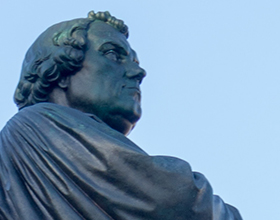
Martin Luther on Vocation and Serving Our Neighbors
Jan 13, 2026 12:19 AM

“For Martin Luther, vocation is nothing less than the locus of the Christian life,” says Gene Edward Veith in this week’s Acton Commentary. “God works in and through vocation, but he does so by calling human beings to work in their vocations.”

In Jesus Christ, who bore our sins and gives us new life in his resurrection, God saves us for eternal life. But in the meantime he places us in our temporal life where we grow in faith and holiness. In our various callings—as spouse, parent, church member, citizen, and worker—we are to live out our faith.

So what does it mean to live out our faith in our callings? The Bible is clear: faith bears fruit in love (Gal. 5:6; 1 Tim. 1:5). Here e to justification by faith and its relationship to good works, and we also encounter the ethical implications of vocation. According to Luther’s doctrine of vocation, the purpose of every vocation is to love and serve our neighbors.

The full text of the essay can be found here. Subscribe to the free, weekly Acton News & Commentary and other publications here.


Comments
Welcome to mreligion comments! Please keep conversations courteous and on-topic. To fosterproductive and respectful conversations, you may see comments from our Community Managers.
Sign up to post
Sort by
Show More Comments
RELIGION & LIBERTY ONLINE
Deck the Halls With Macro Follies
(Via: The American Catholic) ...
‘Act Against Corruption’
Perhaps one of the biggest obstacles to wealth creation in the developing world is corruption. Bribery, rigging of the political process, theft, lack of accountability: all of these lead to instability, bureaucracy, and a lack of incentive to invest. The United Nations has declared today International Anti-Corruption Day in an effort to bring light to this topic and work to prevent it. George Ayittey, Ghanaian economist, explains how massive a problem corruption is for Africa: Imagine, Africa has a begging...
Michael Miller in Legatus Magazine: ‘Community, liberty and freedom’
Acton’s Director of Media, Michael Matheson Miller, discusses the current state of American thought on state, Church, family and liberty in Legatus Magazine. He focuses on the work of two Frenchmen: Alexis de Tocqueville and Jean Jacques Rousseau. Many of the differences can be boiled down to what we mean munity. Rousseau’s vision munity is what the sociologist Robert Nisbet called the munity.” For Rousseau, the two main elements of society are the individual and the state. All other groups...
Defining Subsidiarity Down
Patrick Brennan graciously noted my engagement with his piece on subsidiarity, charitably calling it “substantive.” He takes issue, however, with my “pace Brennan.” He rightly responds that “the very point of the book to which my chapter is a contribution is a parative’ perspective on subsidiarity.” He continues, “My assigned task in writing the chapter was to tell the what subsidiarity means in Catholic social doctrine, period.” To clarify, it seems to me that Brennan is quite ably articulating and...
How (Not) to Solve the Debt Crisis with Two Trillion Dollar Platinum Coins
At some point everyone has heard an idea being discussed in Washington, D.C. and thought or said, “That’s insane.” Americans generally recognize there is, more often than not, something not quite right about inside-the-Beltway thinking. But to those who have never lived or worked in the D.C. area, let me tell you: You don’t know the half of it. Think of your craziest uncle, the one who when you visit for Thanksgiving has some pet theory about how to fix...
The Fountainhead of Bedford Falls
Frank Capra and Ayn Rand are two names not often mentioned together. Yet the cheery director of Capra-corn and the dour novelist who created Objectivism have more mon than you might imagine. Both were immigrants who made their names in Hollywood. Both were screenwriters and employees of the film studio RKO Pictures. And during the last half of the 1940s, both created works of enduring cult appeal, Capra with his filmIt’s a Wonderful Lifeand Rand with her novelThe Fountainhead. The...
The FAQs: The Fiscal Cliff Proposals
Now that we know what the fiscal cliff is all about, what are the plans for dealing with it? Below are the four approaches that have been proposed: The Democrats’ Plan Treasury Secretary Timothy Geithner offered the White House’s fiscal cliff proposal to Republicans in the last week of November. Although the proposal wasn’t released to the public, news reports say it was basically a reprise of Obama’s most recent budget request and contained the following items: • End the...
‘Mary Tyler’ Star: We Need Moore Taxes on the Rich
Celebrated fiscal policy scholar Ed Asner, best known for pretending to be a television news producer on the 1970’s classic The Mary Tyler Moore Show, is the narrator of a new “educational” cartoon produced by a Teachers Union in California called “Tax the Rich.” Where to begin! This video was produced with the intent to indoctrinate children with an anti-capitalistic understanding of everything from levels of taxation to how wealth is created to the relationship between a free-born citizen and...
This Week on AU Online: Lectures on Development and Trade
Poverty, development, and stewardship tend to be topics both of discussion and personal reflection as we are reminded to count our blessings around this time of year. If similar ideas have been on your mind, you may be interested in Globalization, Poverty, and Development, anAU Online lecture series thatexplores the theme of human flourishing and its relation to poverty, globalization, and the Church in the developed world. Join Mr. Brett Elder, a director at Acton Institute and creator of the...
Jazz musician Dave Brubeck: ‘Strengthening man’s vision of God’
Acclaimed and plished, Dave Brubeck died December 5 at the age of 91. He is best known as a poser, who once said Duke Ellington was his mentor. He was known to cancel appearances if his racially-integrated band was asked to leave out non-white members. He was an ambassador of sorts, as well: “Jazz represents freedom, freedom musically and politically,” he says. He notes that his tour “to show how important freedom and democracy are” targeted countries near the then-Soviet...
Related Classification
Copyright 2023-2026 - www.mreligion.com All Rights Reserved