Home
/
RELIGION & LIBERTY ONLINE
/
Environmentalism as religion, one last time
Dec 10, 2025 12:09 PM

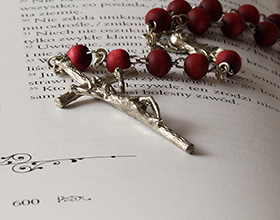
I promise not to belabor this point any further (well, unless something really es in…), but Jay Nordlinger, in the latest National Review, offers more observations [subscription needed] on the religious qualities of “secular” environmentalism, from his perch at Davos. Along the way, he cites my PowerBlog post from a couple weeks ago. The relevant passage:

In other words, you can contribute to an anti-global-warming fund in order to relieve your guilt at having used, for example, an airplane. I put this in Jacksonian terms (I mean Jesse, not Andrew): Don’t be emittin’ without remittin’. Later, Kevin Schmiesing of the Acton Institute will write that these remissions remind him of the indulgences of old, whereby you washed away your sins by your financial contributions. The notorious German friar Johann Tetzel (allegedly) said, “As soon a coin in coffer rings, the soul from purgatory springs.” (He was a rhymer too, at least in English translation.) And more than a few of us have described a certain kind of environmentalism as a modern religion.

The basic idea has gained traction at the top levels of the Catholic hierarchy, as this column by Cardinal George Pell of Sydney demonstrates. I must tip my hat to His Eminence, by the way, for introducing an important nuance: the most zealous promoters of global warming hysteria are not really “religious” in a Christian sense (that would give religion a bad name); they are more accurately described as “”superstitious.”
Comments
Welcome to mreligion comments! Please keep conversations courteous and on-topic. To fosterproductive and respectful conversations, you may see comments from our Community Managers.
Sign up to post
Sort by
Show More Comments
RELIGION & LIBERTY ONLINE
What Christians Should Know About Crony Capitalism
Note: This is the latest entry in the Acton blog series, “What Christians Should Know About Economics.” For other entries inthe series seethis post. The Term:Crony capitalism (sometimes referred to as cronyism or corporatism) What it means:Crony capitalism is a general term for the range of activities in which particular individuals or businesses in a market economy receive government-granted privileges over their customers petitors. Why it Matters: For as long as there have been government officials, there have been economic...
The 7 Best Super Bowl Commercials About Vocation and Stewardship
Contrary to the trite assertion made every year by people who don’t know how to appreciate football, it is not really true that mercials the best thing about the Super Bowl (at least not always). Sure, it may seem that way because the television viewer is mercials than actual game play (in an average game, theratio mercials to playing time is seven to one). The reality, though, is that most of mercials aren’t all that memorable. Only a few stand...
Unemployment as Economic-Spiritual Indicator — January 2016 Report
Series Note: Jobs are one of the most important aspects of a morally functioning economy. They help us serve the needs of our neighbors and lead to human flourishing both for the individual and munities. Conversely, not having a job can adversely affect spiritual and psychological well-being of individuals and families. Because unemployment is a spiritual problem, Christians in America need to understand and be aware of the monthly data on employment. Each month highlight the latest numbers we need...
Mini-Grants available for course development and faculty scholarship
American and Canadian college faculty: Acton is accepting proposals for mini-grants on free market economics. If you’re a professor or you know of a professor teaching in the United States or Canada, be sure to visit the Mini-Grants page. The deadline to turn in proposals is March 31, 2016 and grants can range from $1,000 to $10,000. Acton is accepting applications for proposals in course development and faculty scholarship. Interested in applying, but not sure how to get started? Here...
Ben Sasse on Why Over-Regulation Hurts the Poor
Conservatives are known for arguing about the ill effects of over-regulation, reminding ushow itstifles innovation, cramps entrepreneurship, and harms small businesses.Where we’re lesseffective is connecting this reality to the more fundamental abuses itwields on human dignity in general and the poor and vulnerable in particular. In a 45-minute talk given at Heritage Action, Senator Ben Sasse of Nebraska offers a detailed critique of over-regulation in America. Pointing first to the proper scope of regulatory policies, Sasse proceeds to note the...
Joseph Schumpeter and the Moral Economy
Today is the 133 birthday of the late Austrian-born economist, Joseph A. Schumpeter. A Finance Minister of Austria and later Harvard professor, Schumpeter coined the term “creative destruction” in explaining how capitalism delivers progress: The opening up of new markets, foreign or domestic, and the organizational development from the craft shop to such concerns as U.S. Steel illustrate the same process of industrial mutation—if I may use that biological term—that incessantly revolutionizes the economic structure from within, incessantly destroying the...
The Church’s Social Responsibility: Essays on Evangelicalism and Social Justice
“Evangelicals are starting to believe in institutions again — and not a moment too soon.” So beginsJordan Ballor and Robert Joustra’s introduction to a newcollection of essays, The Church’s Social Responsibility: Reflections on Evangelicalism and Social Justice, whichponders the role of the church and the shape of its social witness. “Organized religion, long the object of derision by authenticity-addicted millennials and prophets of the new atheism alike, is losing its boogeyman status among younger generations,” they continue. “Thus has begun...
Property Rights Vital for Empowering the Poor
On Jan. 27, Acton’s Rome office sponsored a presentation of The International Property Rights Index at the Dominican-run Pontifical University of St. Thomas Aquinas. The private seminar was a premier event in Rome for the index’s publisher, introducing data and case studies sampled from 129 industrialized and developing nations. It was attended by some 40 leveraged opinion makers from the ranks of legal, political, academic and religious sectors. Speakers included the university’s dean of social sciences, Fr. Alejandro Crosthwaite, who...
Explainer: President Obama’s FY2017 Budget
What is the President’s budget? Technically, it’s only a budgetrequest—a proposal telling Congress how much money the President believes should be spent on the various Cabinet-level federal functions, like agriculture, defense, education, etc. (A PDF of the 182 page document can be found here.) Why does the President submit a budget to Congress? The Congressional Budget Act of 1974 requires that the President of the United States submit to Congress, on or before the first Monday in February of each...
Plans to Prosper? The Forgotten Truth of Jeremiah 29
For many evangelicals, 2 Chronicles 7:14 has e a predictable refrain for run-of-the-mill civil religion, supposedly offering thepromise of national blessing in exchange for political purity. “If my people, who are called by my name, will humble themselves and pray and seek my face and turn from their wicked ways, then I will hear from heaven, and I will forgive their sin and will heal their land.” If the nation returns to golden days of godliness, we are told, blessings...
Related Classification
Copyright 2023-2025 - www.mreligion.com All Rights Reserved