Home
/
RELIGION & LIBERTY ONLINE
/
A call to reaffirm the rational roots of Western identity
Jan 12, 2026 10:21 AM

In an article published at the Witherspoon Institute,Samuel Greggargues for the reaffirmation of Western civilization, its roots and its plishments. We need not be “faithful Jews or orthodox Christians to affirm Western civilization’s achievements,” but it is vital that we realize “these faiths’ indispensable role in the growth of Western culture,” he writes.

Gregg explains that today there seems to be a trend to disparage the West, evidenced by current terrorism and even by attitudes in the West, “studiously ignoring or denigrating the West’s impressive achievements.” To counteract this, Gregg paints a large picture of Western plishments, ranging in scope from the Rule of Benedict to the building of St. Paul’s Cathedral to the rule of law and limited government.

The achievements of the West, Gregg points out, “are essentially derivative. They proceed from specific philosophical and mitments without which the West as we know it could never have developed. When those foundations are shaken, we should not be surprised that all that is built on them starts to falter.” The faith-based rationale upon which the West has developed should not be pulled out from under it.

The West’s indispensable Judeo Christian roots should produce “discussion and affirmation.” Gregg concludes his article by encouraging “believers and non-believers alike to rediscover and reaffirm those truths without which … the West will eventually e unknown to itself.”

Read Gregg’s full article here.

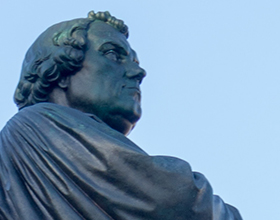
(Picture:By Skyden67 (Own work) [CC BY-SA 3.0], via Wikimedia Commons)

Comments
Welcome to mreligion comments! Please keep conversations courteous and on-topic. To fosterproductive and respectful conversations, you may see comments from our Community Managers.
Sign up to post
Sort by
Show More Comments
RELIGION & LIBERTY ONLINE
The invisible sources of entrepreneurship
Entrepreneurs take risks, they see opportunities that others do not, and they turn those opportunities into businesses. It’s perhaps counterintuitive, but this risk-taking actually requires stable social foundations. Entrepreneurs need to know that ground is solid before they risk a jump. Read More… There is great enthusiasm for entrepreneurship these days. There are social entrepreneurs, intellectual entrepreneurs, educational entrepreneurs and even intra-preneurs (entrepreneurs within their panies). Entrepreneurs like Steve Jobs and Bill Gates are held up as model citizens. Magazines...
Why the Journal of Markets & Morality?
In the latest issue of Religion & Liberty, Acton Institute executive direct Kris Mauren answers the question, “Why does the Acton Institute publish the Journal of Markets & Morality?” For more, check out my interview with Micheal Hickerson of the Emerging Scholars Network. You can support the work of the journal by getting a subscription for yourself or mending a subscription to your library of choice. ...
The Need to be a Victim
For some, in our still largely affluent society, there is a deep seated need to be a member of the victim class. The background of your socioeconomic privilege is no obstacle, as they must create a narrative that points to being a victim. While some might aspire to sainthood, others aspire to victimhood. This video and report courtesy of The Blaze sums it up well. It would be unfortunate if charades like this drown out the real instances of injustice...
VIDEO: Anthony Bradley on ‘Black and Tired’ at The Heritage Foundation
Acton Research Fellow Dr. Anthony Bradley spoke about his book Black and Tired: Essays on Race, Politics, Culture, and International Development at The Heritage Foundation earlier this month, and the video is now online. Dr. Bradley explained just why he called his book “Black and Tired:” The hopes and dreams, aspirations, virtues, institutions, values, principles that created the conditions that put me here today, are being sabotaged and eroded by those who have good intentions, but often do not think...
Charles Schwab and Ted Leonsis: ‘We aren’t the problem’
Billionaire Democrat Ted Leonsis wrote a posting titled “Class Warfare – Yuck!” on his blog yesterday, in which he implored the president, to whose campaign he donated the maximum amount: “Hit a reset button ASAP. Rethink how to talk to businesses and sell business leaders on your plan to make America great! Many of us want to be a part of the solution. We aren’t the problem.” Today, Charles Schwab published an opinion piece in the Wall Street Journal, and...
Arthur Koestler Here and Now
On The Freeman, PowerBlog contributor Bruce Edward Walker marks the 70th anniversary of the publication of Arthur Koestler’s Darkness at Noon and the essay “The Initiates” published a decade later in The God that Failed. As Walker notes, “it’s a convenient opportunity to revisit both works as a reminder of what awaits all democratic societies eager to abandon liberties for the sake of utopian ideologies.” Koestler’s Noon, he says, is where the author is at the height of his powers...
Top 5 Lessons from the Solyndra Failure
The green tech firm Solyndra secured at $535 million federal loan guarantee in 2009 and was touted as an example of a promising green future. A month ago, pany went bankrupt. Here are the top five lessons we should learn from Solyndra’s collapse. 5. Both sides of the aisle are involved. Republican support of federal “investment” is routine — in fact, the DOE program that made Solyndra’s loan was approved by President Bush. It is true that Solyndra’s original application...
Roger Scruton: No escaping morality in economics
Roger Scruton has written an excellent piece on the moral basis of free markets;it’s up at MercatorNet. He begins with the Islamic proscriptions of interest charged, insurance, and other trade in unreal things: Of course, an economy without interest, insurance, limited liability or the trade in debts would be a very different thing from the world economy today. It would be slow-moving, restricted, paratively impoverished. But that’s not the point: the economy proposed by the Prophet was not justified on...
Samuel Gregg: Imitate Sweden’s Economic Liberation, Not Her Failed Socialism
Acton’s director of research Samuel Gregg has a piece over at The American Spectator that may surprise big government liberals. (We know you read this blog.) In “Free Market Sweden, Social Democratic America,” he lays out the history of Sweden’s social democracy — its nature and its effects on the country’s economy — and then draws lessons for the United States. The Scandinavian country isn’t quite the pinko nanny state Americans like to look down upon, and we’ve missed their...
Religion & Liberty: An Interview with Metropolitan Jonah
Religion & Liberty’s summer issue featuring an interview with Metropolitan Jonah (Orthodox Church in America) is now available online. Metropolitan Jonah talks asceticism and consumerism and says about secularism, “Faith cannot be dismissed as partmentalized influence on either our lives or on society.” Mark Summers, a historian in Virginia, offers a superb analysis of religion during the American Civil War in his focus on the revival in the Confederate Army. 2011 marks the 150th anniversary of America’s bloodiest conflict. With...
Related Classification
Copyright 2023-2026 - www.mreligion.com All Rights Reserved