


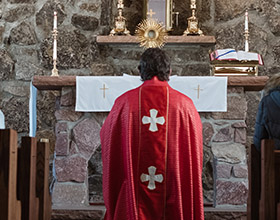
5 Marriage Builders You Don’t Want to Ignore
By Jennifer Waddle
"Therefore encourage one another and build each other up, just as in fact you are doing.”- 1 Thessalonians 5:11
Strong marriages don’t just happen; they are built over time. Just as our faith is steadily built upon a solid foundation, so our marriages are built brick-by-faithful-brick. From the moment we say, “I do” until “death do us part,” we have an obligation to build our marriages lovingly and consistently.
Here are 5 marriage builders you don’t want to ignore.
Marriage Builder #1: PrayerI’m glad you didn’t skip reading this step. Prayer may seem like a cookie-cutter marriage builder, but really, it’s one of the most essential building tools you have.
Take prayer seriously. Spend time interceding for your spouse and praying together. Consider enlisting an older married couple to be part of your marriage prayer team. Gather together once a month to pray for your marriages. Truly, this can make all the difference between a marriage that crumbles from neglect and a marriage that thrives!
And pray in the Spirit on all occasions with all kinds of prayers and requests. With this in mind, be alert and always keep on praying for all the Lord's people. (Ephesians 6:18)
Marriage Builder #2: PromisesWhen times get tough, it’s easy to lose perspective. That’s why it’s so important to not only know the promises of God, but recall them in seasons of difficulty.
Marriages that are strengthened by God’s promises are like homes that are reinforced to weather storms. Even when the winds of change come, and the elements beat against the structure, the home stands firm. So it is with marriages that claim God’s promises in times of trouble.
Here are a few key promises to remember in marriage:
The LORD will fight for you; you need only to be still. (Exodus 14:14)
He gives strength to the weary and increases the power of the weak. (Isaiah 40:29)
So do not fear, for I am with you; do not be dismayed, for I am your God. I will strengthen you and help you; I will uphold you with my righteous right hand. (Isaiah 41:10)
Marriage Builder #3: PrioritizeIt can be really difficult to prioritize our marriages. With the daily demands of life, we often put our spouses on the back burner and give them whatever time or energy we have left over.
God’s design for marriage is that we put Him first and our spouses second. Yet, so often, we put our children, our work, or others in place of our spouses. In my book, Prioritize Your Life, I challenge women with these questions:
What if submitting to our husbands, as to the Lord, was viewed as a beautiful act of worship unto God?What if prioritizing our spouses became a form of security for our children and stability in our homes?Making our spouses a priority not only builds up our marriages, it sets a strong example to our children.
Marriage Builder #4: PraiseWords of affirmation go a long way in building up our spouses. Even if their love language is physical touch or acts of service, hearing positive affirmations are something all of us need to experience.
Instead of being quick to disagree, let’s be quick to offer encouragement. Let’s be discerning about what to let go and what to pursue. Husbands and wives need to know they are doing a good job—not a perfect job—but a good job.
A soft answer turns away wrath, but a harsh word stirs up anger. (Proverbs 15:1)
Marriage Builder #5: PeaceThis marriage builder goes hand-in-hand with the above point, praise. Keeping the peace in whenever possible is not only healthy for couples, it’s healthy for those around them.
Of course, this doesn’t mean we can’t have serious conversations or disagreements. Those are sometimes necessary. However, when arguments become the norm, it’s time to take a step back and reclaim the peace.
Here is a helpful post from Gary Smalley that answers the question, Keeping the Peace at Any Price?
Strong marriages take time and effort. They are built one faithful brick at a time. Just as we wouldn’t ignore cracks in our home’s foundations, so we shouldn’t ignore things in our marriages that might tear them down. Instead, let’s implement a few of these marriage builders and strengthen our relationship against every wind of change.
Jennifer Waddle considers herself a Kansas girl, married to a Colorado hunk, with a heart to encourage women everywhere. She is the author of several books, including Prayer WORRIER: Turning Every Worry into Powerful Prayer,and is a regular contributor for LifeWay, Crosswalk, Abide, and Christians Care International. Jennifer’s online ministry is EncouragementMama.com where you can find her books and sign up for her weekly post, Discouragement Doesn’t Win. She resides with her family near the foothills of the Rocky Mountains—her favorite place on earth.
It's time we get real about marriage relationships! Join marriage coach, Dana Che, as she and her guests deliver witty, inspirational, real relationship talk from a faith-based perspective. New episodes of the Real Relationship Talk Podcast drop every Tuesday.







 zpostcode
 Recruit
 weather
 mreligion
 Yellowpages
 sport
sport constellation
 shopping
 name
name game
game directory
 literature
 Word
Word tour
tour furnish
 Lottery
 tftnews
 lyrics
 News
News digital
 car
car dir
dir Edu
Edu Finance


